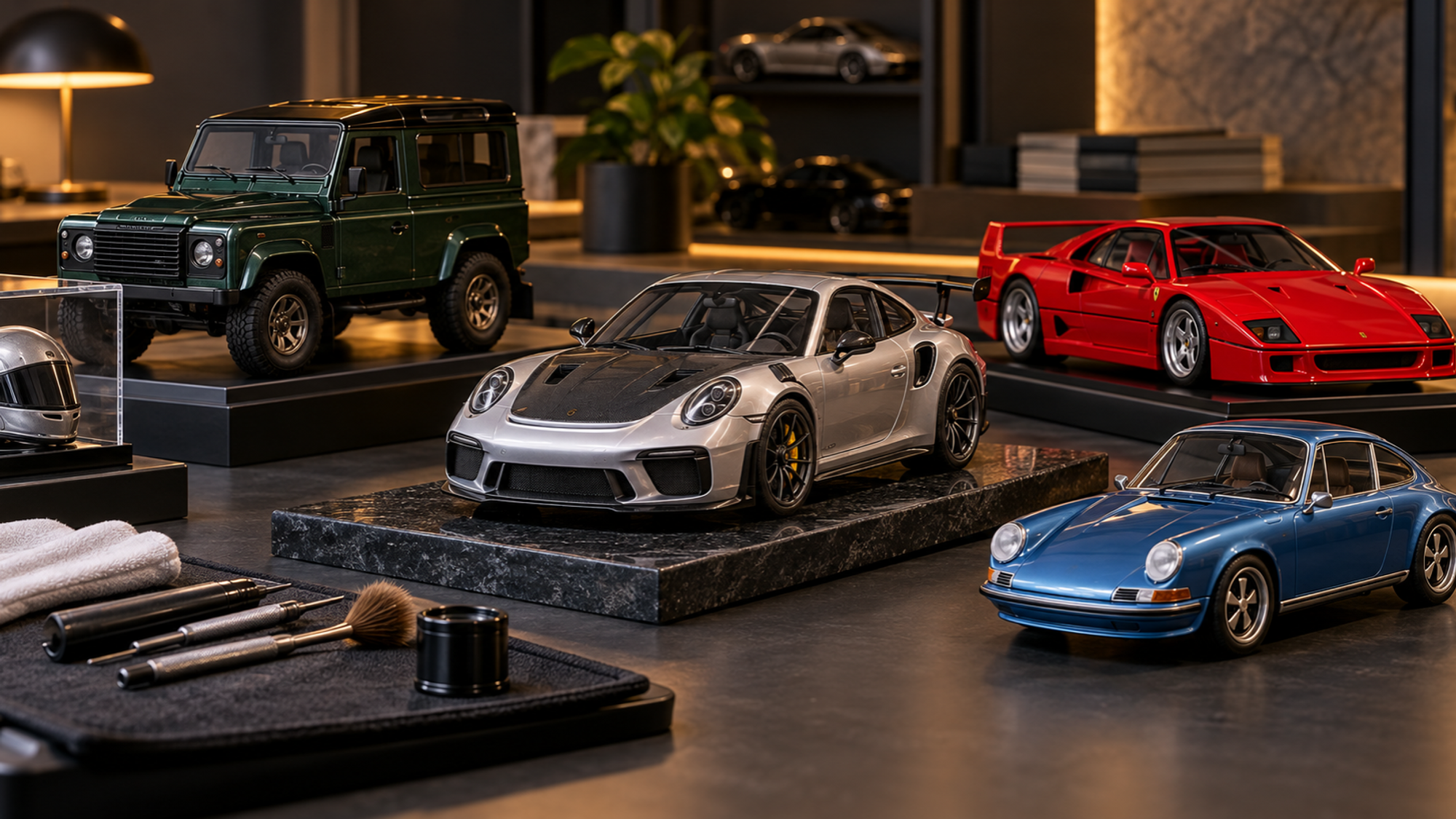
Almost Real occupies a specific niche in premium diecast: serious 1:18 presence without requiring hand-built money. Collectors argue about whether that reputation is deserved. The useful question is narrower — what is the brand actually optimising for?
This profile is for diecast enthusiasts comparing diecast cars 1:18 and model cars 1/18 before they spend. Frantic Supplies stocks Almost Real in the collectibles lane; that belongs on the table. Treat the rest as a field guide, not a hymn.
Where the brand sits on the map
In a simple four-tier mental model — hand-built, premium diecast, mainstream diecast, sealed resin — Almost Real competes in premium diecast. That means:
- Zinc-alloy (diecast) construction as the default expectation
- Opening parts on many releases
- Interiors and engine bays meant to be inspected, not merely coloured in
- Pricing that aims under the rarefied hand-built ceiling
It is not trying to be CMC. It is not trying to be a sealed Spark alternative. Knowing that prevents category errors when you read review scores out of context.
If your collection leans heavily into 1:64 scale diecast cars, understand that Almost Real’s centre of gravity is larger-scale presence. Cross-shopping scales is fine; confusing their jobs is not.
What collectors usually praise
Patterns, not commandments — always verify the specific release:
- Subject curation that feels intentional rather than infinite
- Value-for-presence in side-by-side forum comparisons against higher-priced peers
- Interior and drivetrain presentation that rewards a second look
- Opening-part theatre that still feels adult on a shelf
- Stance and wheel choices that survive reference-photo checks more often than average
These are the reasons the brand shows up in “what should I buy instead of stretching for hand-built?” conversations among owners of diecast model cars.
What to inspect before you fall for paint
Paint sells the first five seconds. Ownership is the next five years. On Almost Real — as on any premium diecast peer — check:
- Door and bonnet gaps for left-right symmetry
- Glass seating and chrome edge cleanliness
- Wheel-to-arch stance against period reference photos
- Baseplate flatness (rocking models are quiet heartbreak)
- Registration on small badges and scripts
- Hinge friction — too loose rattles; too tight scrapes paint
If a listing only shows beauty angles, ask for a top-down shut-line shot. Serious sellers expect the request.
Consistency and the adult collector’s real risk
Peak detail on one hero model does not define a brand. Consistency across a year’s purchases does. When Almost Real earns loyalty, it is often because collectors feel the brief was delivered again — not because a single masterpiece forgave three disappointments.
Logistics matter as much as tooling. Buy from partners who pack for hinges and mirrors. Opening-part diecast dies in bad shipping more often than it dies in factories.
Almost Real versus the usual comparisons
Versus AUTOart: overlapping premium diecast brief; different strengths by subject and era. Compare the exact cars, not the logos.
Versus sealed resin specialists: different product. Resin wins obscure catalogue depth and often edge sharpness; Almost Real wins opening parts and metal mass.
Versus hand-built: different budget planet.
Versus kits (including Tamiya model car kits): different hobby muscle. Kits teach seeing; premium diecast teaches living with a finished object under dust and light.
Who should buy it — and who should not
Buy Almost Real if you want premium diecast cars 1:18 with opening parts, you care about presence-per-currency, and you are building a display rather than a vault of untouchables.
Look elsewhere if you need sealed resin catalogue depth for obscure race shapes, or if you specifically want hand-built part counts and are prepared to pay for them.
Wait if you only have a crowded shelf and harsh sun. Premium diecast deserves light control and negative space.
Soft close
Almost Real is a rational answer inside the premium diecast conversation — not a religion. Use it when the subject matches your shelf and the inspection checklist passes. Frantic Supplies will keep writing about diecast literacy either way: fewer logos, more looking, better model cars on better shelves.